The 2026 Pre-Foreclosure Wave: Real or Overhyped?
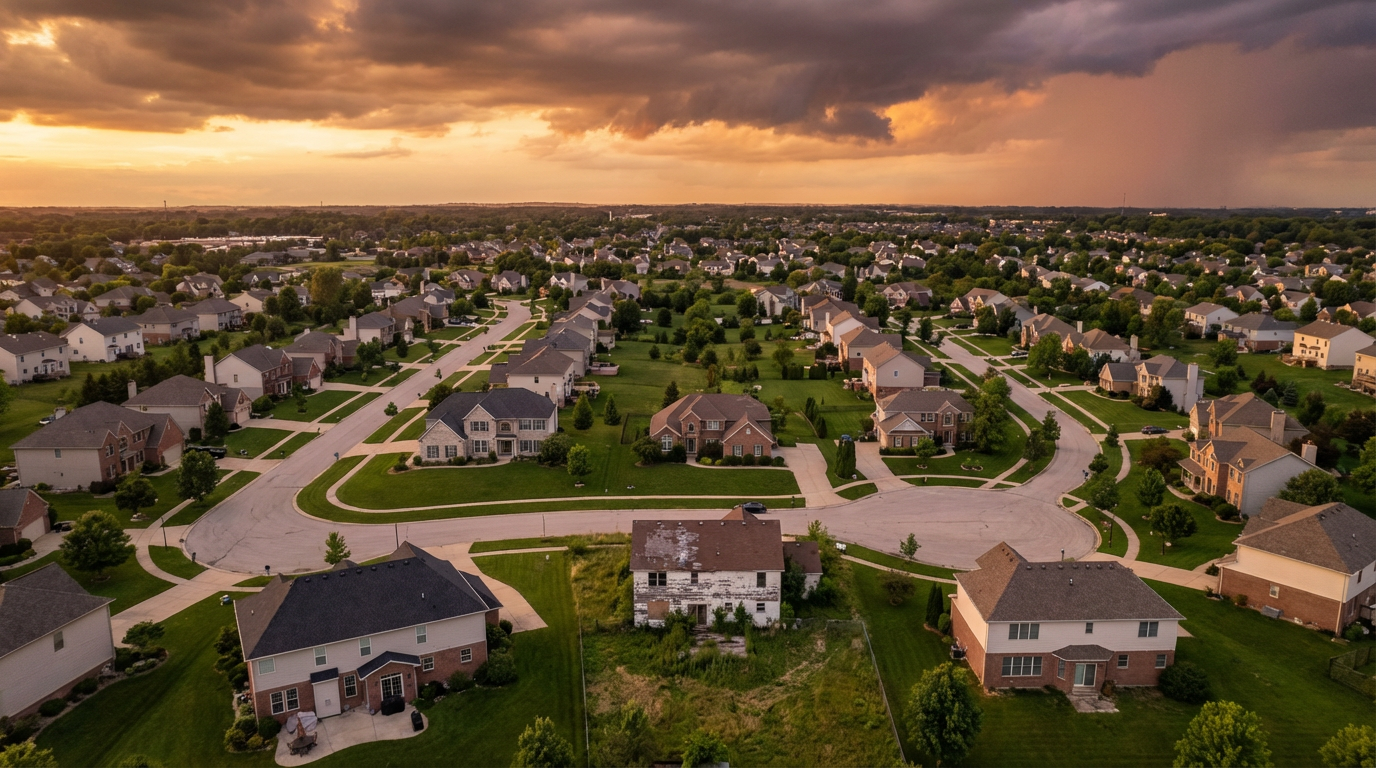
The 2026 Pre-Foreclosure Wave: Real or Overhyped?
Every year since 2023, someone on a podcast or in a Facebook group has confidently declared that this is the year the foreclosure wave finally hits. The reasoning usually goes something like: pandemic forbearance programs are ending, millions of homeowners are underwater, and the whole house of cards is about to collapse.
And every year, the wave doesn't come.
So here we are in 2026. Foreclosure activity is rising — meaningfully, this time. But does that mean the long-predicted tsunami is finally making landfall? Or are we watching the market normalize while people confuse "returning to baseline" with "catastrophe"?
Let's look at what the actual numbers say, where the real pre-foreclosure inventory is building, and how investors can find actionable deals without buying into hype — or preying on people in bad situations.
Three Years of Predictions — Why the Foreclosure Wave Keeps Not Happening
The "foreclosure wave" narrative has been circulating since at least mid-2023, when the last of the COVID-era forbearance programs wound down. The theory was simple: millions of homeowners had paused their mortgage payments, and once those protections expired, defaults would spike and a flood of distressed inventory would hit the market.
It made logical sense. But it didn't happen, for a few reasons that are worth understanding if you want to read the current market correctly.
First, most homeowners who exited forbearance had significant equity. Home prices had surged 30-40% in many markets during 2020-2022. Even if someone fell behind on payments, they could sell at a profit rather than lose the home to foreclosure. That escape valve kept the foreclosure pipeline from filling up.
Second, loan servicers got better at loss mitigation. Modifications, payment deferrals, partial claims — lenders had a whole toolbox of alternatives to foreclosure, and they used them aggressively. Why take a property back when you can restructure the loan and keep a performing borrower?
Third, inventory was (and still is) historically low. Even as some distressed properties entered the pipeline, demand from buyers absorbed them before they could accumulate. A foreclosure in a market with 1.5 months of supply behaves very differently than one in a market with 10 months of supply.
So the wave didn't hit. But something is changing.
What the January 2026 ATTOM Data Actually Shows: Starts Up 26%, REOs Up 59%
According to ATTOM's January 2026 U.S. Foreclosure Market Report, foreclosure activity has now risen year-over-year for eleven consecutive months. That's not a blip. That's a trend.
Here are the numbers that matter:
- Foreclosure starts rose 26% year over year in January 2026. That means significantly more homeowners received their first formal notice of default or lis pendens compared to January 2025.
- Completed foreclosures (REOs) jumped 59% from a year ago. Banks are actually taking properties back at a pace we haven't seen in years.
- Nationwide, roughly one in every 3,871 housing units had a foreclosure filing as of the most recent reporting — still well below crisis-era levels, but trending upward consistently.
These aren't small moves. A 59% increase in completed foreclosures is notable by any measure. And the eleven-month streak of year-over-year increases suggests this isn't seasonal noise — it's a genuine shift in market conditions.
But here's where context matters. We're comparing against a period (2023-2024) when foreclosure activity was at generational lows. Coming off the floor, even a 59% increase in REOs puts us roughly in line with pre-pandemic norms, not anywhere near 2008-2012 territory.
Think of it this way: if you normally run a 9-minute mile and then you're injured and your pace drops to 15 minutes, getting back to 10 minutes is a big improvement — but it doesn't mean you're suddenly an elite runner.
State-by-State Breakdown: Where Pre-Foreclosure Inventory Is Real
National averages are useful for headlines, but they're terrible for investment decisions. Foreclosure activity is intensely local, and the gap between the hottest markets and the quietest ones is massive right now.
Based on ATTOM's state-level data, the states with the highest foreclosure rates heading into 2026 include:
- Florida — Consistently at or near the top of the list. High insurance costs, rising HOA fees, and an oversupply of condos in certain metros are creating genuine distress. South Florida and parts of the I-4 corridor are seeing real pre-foreclosure activity, not just paper filings.
- South Carolina — A market that boomed during the pandemic migration wave is now seeing some of those stretched buyers fall behind. Particularly in suburban and exurban areas where speculative building outpaced demand.
- Illinois — Chicago and its collar counties have long had elevated foreclosure rates due to judicial foreclosure timelines and economic pressures. The pipeline here moves slowly but steadily.
- New Jersey and Maryland — Both judicial foreclosure states where the process takes longer, meaning the filings we're seeing now may reflect defaults that started 12-18 months ago.
On the flip side, states like Idaho, Montana, and Vermont have foreclosure rates so low they're barely worth tracking for distressed deal flow. If you're investing in those markets, pre-foreclosures aren't going to be your primary lead source.
The takeaway: the opportunity is geographically concentrated. If you're running a pre-foreclosure strategy, you need to be laser-focused on the metros and zip codes where filings are actually translating into motivated sellers — not just casting a wide net and hoping for the best.
Hype vs. Opportunity: Why Rising Filings Still Don't Mean a 2008-Style Crash
Let's address the elephant in the room. Every time foreclosure data ticks up, someone compares it to 2008. And every time, that comparison falls apart under scrutiny.
Here's why 2026 is fundamentally different from 2008:
Homeowner equity is massive. American homeowners are sitting on over $30 trillion in home equity. Even homeowners who are behind on payments often have six figures of equity in their property. In 2008, millions of borrowers were underwater — they owed more than their homes were worth. That's simply not the case today at any meaningful scale.
Lending standards are tighter. The subprime loans, stated-income products, and negative-amortization mortgages that fueled the 2008 crisis don't exist in today's market. The borrowers who've been getting mortgages since 2010 are, on average, much more creditworthy than the 2005-2007 vintage.
Supply remains constrained. We're still short millions of housing units nationwide. Even if foreclosure inventory doubles from here, it gets absorbed into a market that's starved for listings. In 2008, we had a glut. Today we have a shortage.
Vacancy and zombie foreclosure rates remain low. ATTOM's Q1 2026 Vacant Property and Zombie Foreclosure Report showed the vacant residential property rate holding steady at just 1.3%, with zombie foreclosures actually dropping in 28 states and Washington, D.C. Properties aren't sitting empty and rotting. They're being resolved.
Redfin's own 2026 outlook used the phrase "the great housing reset" — but even their analysis points to a slow, grinding affordability improvement, not a crash. Income growth is expected to outpace home-price growth, which is healthy normalization, not a crisis.
Experts across the industry overwhelmingly agree: a nationwide crash is very unlikely in 2026 unless the economic outlook fundamentally deteriorates in ways nobody's currently forecasting.
So what does this mean for investors? It means the opportunity isn't in betting on a crash. It's in recognizing that rising foreclosure activity creates a growing pool of motivated sellers in specific markets — sellers who need solutions, not lowball offers.
How to Filter Pre-Foreclosure Leads and Identify Actionable Deals in 2026
Not every pre-foreclosure filing is a deal. In fact, most aren't. A huge percentage of homeowners who receive a notice of default will cure the default, modify the loan, sell on the open market, or find some other resolution that doesn't involve selling to an investor at a discount.
Your job as an investor is to filter for the situations where you can genuinely help — and where the numbers actually work. Here's how to think about it:
1. Focus on equity. A homeowner with a $200,000 mortgage on a $400,000 house has options. A homeowner with a $350,000 mortgage on a $380,000 house in a declining market has fewer options. Skip tracing and data tools can help you estimate equity positions before you ever reach out.
2. Look at filing stage and timeline. A fresh notice of default is very different from a property scheduled for auction next month. Earlier in the process, homeowners have more time and more options — which can actually make them more receptive to a conversation, not less.
3. Stack your data. Pre-foreclosure status alone isn't enough. The best leads combine distress signals: pre-foreclosure plus high equity, plus out-of-state owner, plus property in poor condition. Use driving for dollars to identify physical distress, then cross-reference with foreclosure filings. That overlap is where the real deals live.
4. Filter by market. Concentrate your efforts in the states and metros where filings are actually elevated — Florida, South Carolina, Illinois, New Jersey, Maryland. Don't waste direct mail budget blanketing a state with a 1-in-15,000 foreclosure rate.
5. Track auction dates and work backward. Properties with auction dates 60-90 days out represent homeowners who are running out of time but still have enough runway to close a deal. Too far out, and they'll procrastinate. Too close, and there isn't time to close.
6. Use direct mail strategically. Pre-foreclosure homeowners are getting bombarded with solicitations. Generic "We Buy Houses" postcards get thrown away. Personalized letters that reference their specific situation (without being invasive) and offer a clear value proposition — like a quick close that lets them walk away with equity — perform significantly better.
The Ethical Approach: How to Work with Distressed Homeowners the Right Way
This is where a lot of investors get it wrong, and it's worth spending some time on.
Pre-foreclosure investing puts you in contact with people going through one of the most stressful experiences of their lives. How you handle that interaction matters — not just morally, but practically. Investors who treat distressed homeowners like targets to be exploited burn bridges, generate complaints, and eventually run out of deal flow. Investors who genuinely solve problems build reputations that generate referrals for years.
Here's what ethical pre-foreclosure investing looks like in practice:
- Lead with listening, not pitching. When you connect with a homeowner in pre-foreclosure, your first job is to understand their situation. Do they want to stay in the home? Do they know how much equity they have? Have they explored loan modification? Sometimes the best thing you can do is point someone toward resources that help them keep their house. That's not a lost deal — that's doing right by people.
- Be transparent about your intentions. You're an investor. You're looking to buy properties at a price that makes financial sense for you. There's nothing wrong with that, as long as you're upfront about it. Don't pretend to be a nonprofit or a government program. Don't obscure the fact that you intend to profit.
- Make fair offers. "Fair" doesn't mean retail price. It means an offer that reflects the property's condition, the speed and certainty you're providing, and the homeowner's alternatives. If someone has $150,000 in equity and you're offering them $10,000 to walk away, that's not a deal — that's exploitation. Run your numbers honestly and make offers you'd be comfortable defending in public.
- Explain the process clearly. Many homeowners in pre-foreclosure don't fully understand the timeline they're facing, the options available to them, or what selling to an investor actually involves. Take the time to walk them through it. Provide everything in writing. Give them space to consult with an attorney or advisor.
- Don't use pressure tactics. Yes, there's a clock ticking. But using fear and urgency to push someone into a bad deal is a short-term play that creates long-term problems. If your offer is genuinely good, it can withstand scrutiny and a few days of consideration.
The pre-foreclosure space has a reputation problem, and it's largely earned. Investors who commit to doing this the right way aren't just being nice — they're building a sustainable business in a segment that's growing.
The Bottom Line
The pre-foreclosure wave isn't exactly hype, but it's not the apocalypse either. Foreclosure activity is rising meaningfully from historic lows, creating a growing pool of motivated sellers in specific markets. That's a real opportunity for investors who know how to filter leads, work the data, and approach homeowners with integrity.
But if you're sitting around waiting for a 2008-style crash to hand you deals on a silver platter, you're going to be waiting a long time. The smart money isn't betting on a collapse. It's building systems to find and close the deals that are available right now — in the markets where the numbers actually support it.
Foreclosure starts up 26%. REOs up 59%. Eleven consecutive months of year-over-year increases. The data is real. The question is whether you're positioned to act on it.